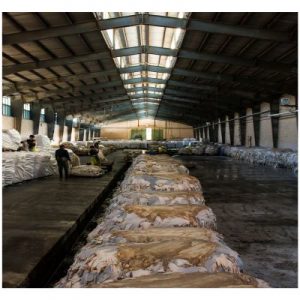
Leather taning
A process that allows the hide/skin to preserve all its natural characteristics intact and stable over time.
Leather tanning is the process of treating animal hides to turn them into durable and pliable material for various uses. The tanning process dates back thousands of years and has evolved over time with advancements in technology and techniques.
The tanning process begins with the collection of raw animal hides, usually from cows, sheep, or goats. These hides are first cleaned to remove any remaining flesh, hair, and other contaminants. Once cleaned, the hides are treated with a tanning agent to prevent rotting and decay. There are several methods of tanning, including vegetable tanning, chrome tanning, and more traditional methods like brain tanning.
Vegetable tanning is one of the oldest methods of tanning and involves soaking the hides in tannins found in vegetable matter such as tree bark, leaves, or fruits. This process can take several weeks to complete, but results in a high-quality leather that is firm and durable. Chrome tanning, on the other hand, uses chromium salts to tan the hides quickly and efficiently. This method is popular in the modern leather industry due to its speed and effectiveness.
Once the tanning process is complete, the hides are further processed to achieve the desired finish. This may involve dyeing the leather to add color, embossing or stamping the surface to create texture, or buffing and polishing to give the leather a smooth and shiny appearance. The leather is then dried and conditioned to ensure it remains soft and supple.